
When I’m visit my hometown, I like to go for walks with my parents
They live on the eastern edge of South Dakota, where the Big Sioux runs down to meet the Missouri. There’s a wooded peninsula between the two rivers. A quiet area full of cottonwoods. We see deer, Baltimore orioles, and the occasional pileated woodpecker working a dead trunk. It is kind of quiet place that empties my head.
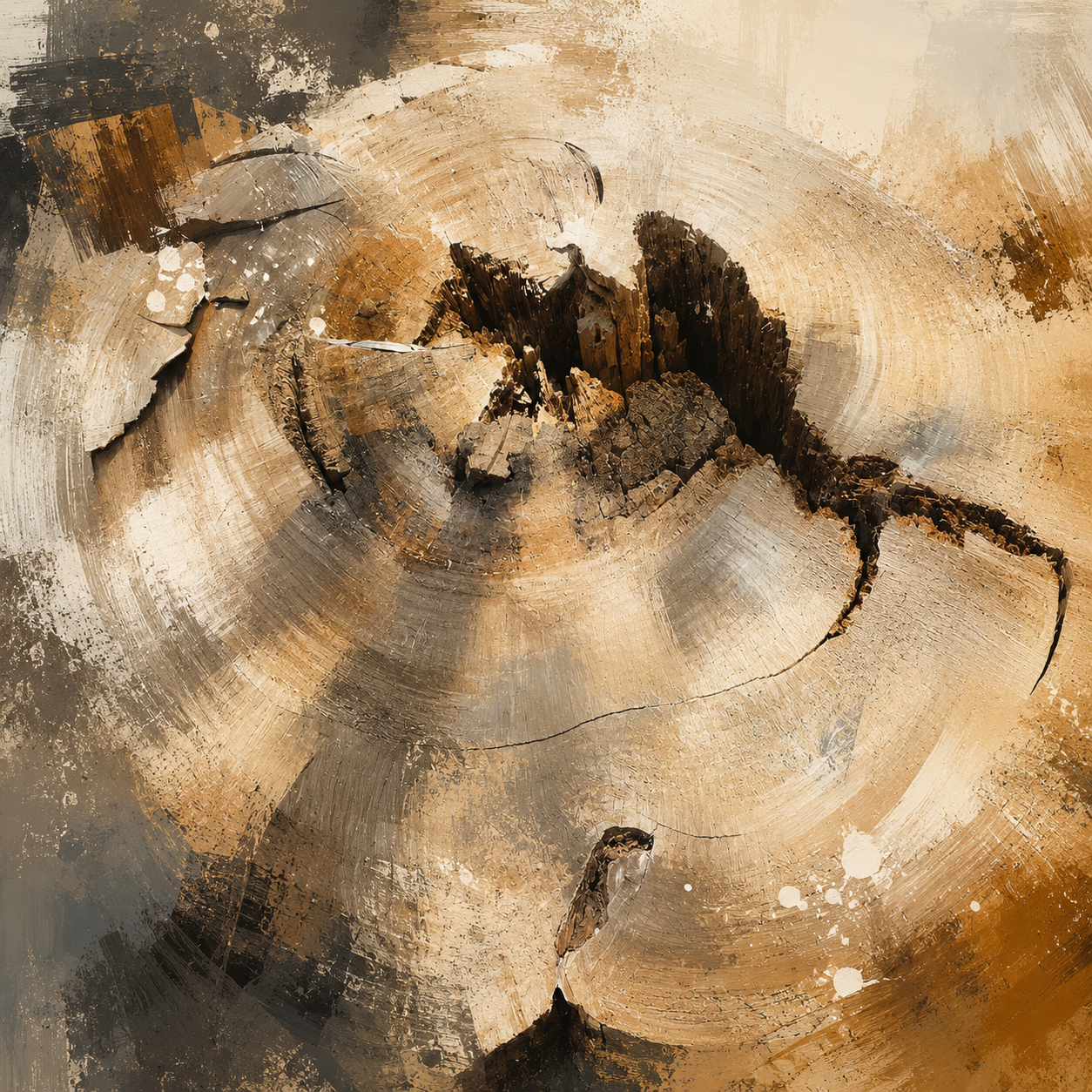
On our last walk, we found a stump. Huge — wider across than I expected, the kind of trunk you stop and put your hand on. Given where it stood, in the sandy ground between two rivers, I’m certain it was a cottonwood.
Cottonwoods are among the fastest-growing hardwoods on the continent, They thrive in the sandy soil of the region. From the size of it, I’d guess close to a century old, give or take.
At that age, it was a sapling around the First World War and the 1918 influenza pandemic. It was already decades old before there were antibiotics. When it gained measureable height, insulin hadn’t been discovered, and the idea of operating on a beating human heart was unthinkable. It stood through the second war, the interstates, the moon landing, and COVID.
One tree, alive long enough to share the planet with MRI scanners, heart transplants, pig-to-human transplants, genomic medicine, and the start of the AI boom.
My first reaction, standing there, was sadness. It most likely went down in the 2024 flood. It was a record breaking 1,000 year flood that covered this peninsula in feet of water.
And I caught myself asking the reflex question. What went wrong? What made it fail?
As I've thought about it more, sadness was the wrong reaction.
It didn’t die because it was weak. It died because it lived exactly the way a cottonwood is built to live — rooted on the restless edge of the water, holding the bank together, giving shade and shelter to whatever needed it — until a flood, or the slow decay of time crossed a line it was always going to cross eventually. It didn’t fail at being a tree. It was a tree, completely, for a hundred years.
I’ve been turning that over since. The rings are still there in the cut face — one for every year, a life recorded, even if they can’t tell you a single thing the tree actually saw. Time, held in wood.
So here’s what I brought home, and I’ll just say it plainly. How do you want to live? Not how do you want to avoid breaking — that’s the reflex question, the one I caught myself asking the stump. How do you want to live, knowing that eventual breaking is part of the deal?
Most of us chose medicine for real reasons. It gives purpose, a great living, and on the good days fulfillment. It also takes, and we know what it takes. The work I keep coming back to, for the physicians I coach, and honestly for myself, is holding those two things at once. The living you’re making. The life you actually want recorded.
The tree didn’t get to choose. We do.
— Ben
MORE FROM THE DEVELOPING DOCTOR
 |
 |
 |


Responses